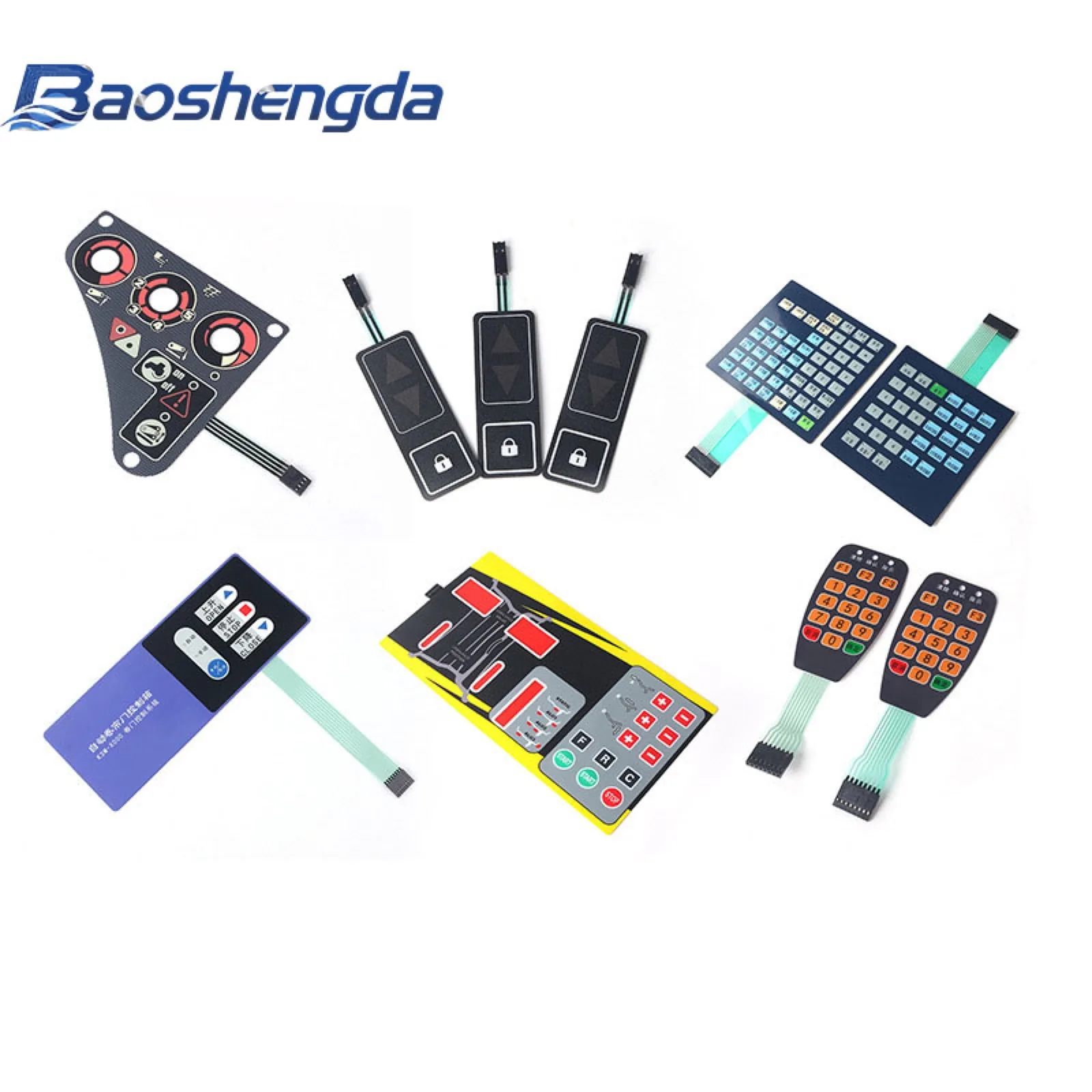
What Is Industrial HMI?
Industrial HMI (Human Machine Interface) refers to the interface between operators and industrial machines.
It is used to control machines, monitor systems, operate production lines and support safe, repeatable industrial operation. In many automation projects, the HMI must work with gloves, dust, vibration, oil mist, humidity, cleaning and frequent button use.
Industrial HMI panels connect operators with machines through durable graphics, tactile inputs, display windows, lighting and circuit interfaces designed around the equipment and operating environment.
System Architecture
Industrial HMI systems typically include visual, input, sensing, lighting and electrical control layers. Each layer must match the machine housing and the operator workflow.
Graphic OverlayVisual interface for fixed icons, display windows, printed instructions, warning labels and equipment branding.
Membrane SwitchThin input system for machine controls, mode selection, start, stop, reset and parameter keys.
Rubber KeypadAlternative input option when raised keys, soft touch feel or high-cycle tactile operation is required.
FSR Pressure SensorForce sensing layer for pressure input, threshold detection, tactile response or operator feedback.
Backlight / LGFVisual feedback for low-light factories, status indicators, symbols, buttons and night-shift operation.
PCB / FPC Control SystemElectrical connection layer for signal routing, LED drive, sensor reading, connector fit and machine controller integration.
Baoshengda Industrial Capability
Baoshengda supports full industrial HMI integration from drawing review to prototype and production. The work is not limited to one button layer; it covers how the front panel fits the equipment, control circuit and operating environment.
Machine Control Interfaces
Custom key areas, overlay graphics, windows, tactile keys, backlit indicators and connector-ready control panels.
Production Line Control Panels
Operator panels for repeated setup, monitoring, confirmation, alarm acknowledgement and process adjustment.
Factory Automation HMI Systems
Integrated HMI modules for automation equipment, test fixtures, robotic workstations and industrial electronics.
Industrial Instrumentation Panels
Durable front panels for instruments, controllers, meters, test equipment and measurement devices.
Heavy-Duty Equipment Interfaces
Ruggedized input surfaces designed around dust, vibration, humidity, cleaning, glove use and long operation cycles.
Technical Advantages
Industrial Durability
- High durability for industrial environments
- Resistance options for dust, oil and humidity
- Long lifecycle mechanical performance
Stable Control
- Stable electrical signal transmission
- Connector and tail routing review
- Compatible with complex machine systems
Custom Interface Design
- Customizable control layout
- Fixed labels, windows and key positions
- Support for operator workflow and equipment housing
System Integration
- Membrane switch, overlay and sensor combination
- Backlight and sealing options
- Link to complete HMI panel system design
Applications
Industrial automation HMI panels are used where operators need a dependable control surface for machinery, production systems and factory equipment.
CNC Machine Control Systems
Mode selection, directional keys, setup functions, status indicators and sealed control panels.
Industrial Automation Equipment
Operator interfaces for assembly machines, test fixtures, controllers, instruments and process equipment.
Factory Production Lines
Control panels for start, stop, reset, confirmation, alarm acknowledgement and workflow input.
Robotics Control Interfaces
Interface areas for fixtures, robot cells, teach-related panels and operator confirmation controls.
Energy and Power Systems
Panels for power equipment, charging systems, control boxes and rugged industrial electronic modules.
Industrial Testing Equipment
Durable front panels for measurement, laboratory, quality inspection and electronic test systems.
Integration Options
- Membrane switch integration
- FSR pressure sensing integration
- Backlit interface design
- Waterproof industrial sealing
- EMI shielding options
- FPC / PCB control system integration
- Graphic overlay and display window integration
- Rubber keypad or hybrid input design
Quality and Reliability
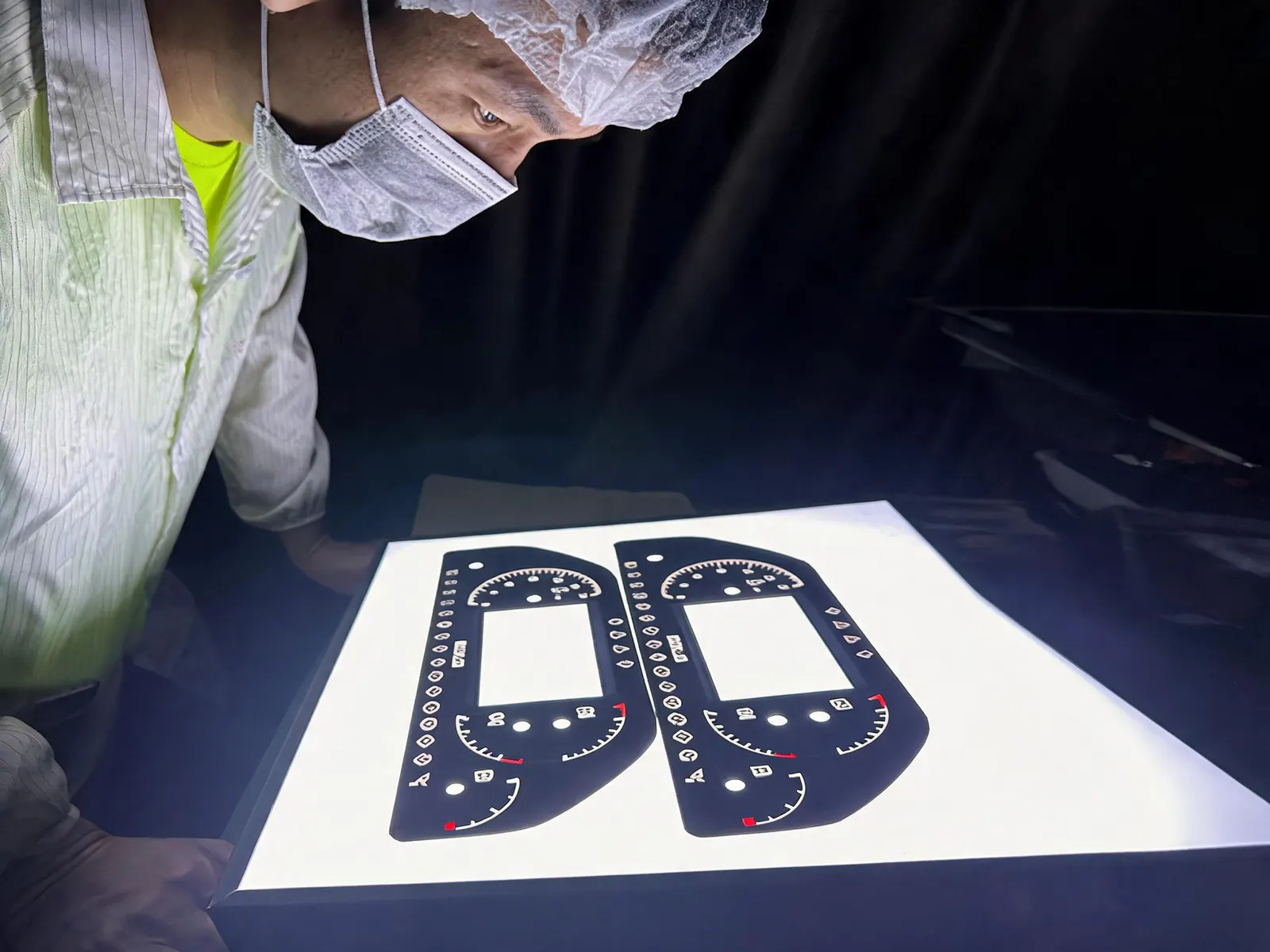
Industrial HMI reliability should be checked around the actual machine environment. A panel can look correct in a drawing but still fail if the tail route, adhesive, sealing border or key feel is not matched to the housing.
- Industrial-grade durability testing
- High/low temperature resistance review
- Humidity and vibration testing
- Electrical stability testing
- Life cycle testing
- Backlight and window inspection
- Adhesion and tail exit review
- RoHS / SGS compliance support where applicable
Design Information Needed for Quotation
For an industrial automation HMI project, please send information that explains the machine, not only the front artwork.
- 2D drawing, front panel artwork and housing photos
- Machine type, operator workflow and key function list
- Overlay material, surface finish, window and label requirements
- Key feel, backlight, FSR sensing or waterproof requirements
- Tail exit, connector, PCB/FPC and controller interface details
- Dust, oil, humidity, cleaning, vibration or temperature exposure
- Prototype quantity, annual quantity and target lead time
Prototype review: layout model or working keypad?
A rigid mock-up can help check reach and enclosure fit without proving switch feel or electrical operation. Use the robot operator keypad prototype approval guide to choose the next sample and separate layout decisions from functional checks.
Application guide for robot teaching interface allocation
A tablet or teach pendant can carry setup screens, but nearby repeatable actions may still need fixed local confirmation. Use the robot teaching interface allocation guide to assign non-safety actions by operator position, machine-state visibility, glove use and failure behavior before approving the mounted keypad sample.
Buyer guide for AI-assisted machine HMI quotation
When AI-assisted engineering or control enters a machine, freeze which actions remain local and manual before quoting the physical panel. Use the AI-assisted machine HMI RFQ guide to align key authority, accepted states, circuit mapping, full tail and connector evidence, and mounted sample ownership.
Buyer guide for IO-Link retrofit HMI quotation
When sensor setup and diagnostics move into an IO-Link engineering workflow, define which maintenance actions still need a fixed local panel before quoting the hardware. Use the IO-Link retrofit HMI RFQ guide to prepare the action matrix, enclosure datums, tail route, connector evidence and commissioning sample checks.
Buyer guide for warehouse robot HMI spares
A matching outline does not prove that one spare panel is interchangeable across a mixed-revision robot fleet. Review the warehouse robot HMI spare approval guide for the compatibility matrix, mounted swap scenarios, rollback boundary and replacement RFQ package.
Buyer guide for remanufacturing workcell controls
When returned components vary in condition, review how operator disposition decisions are separated from machine-motion commands before the front-panel drawing is frozen. See the remanufacturing workcell HMI control guide for the function map, safety boundary, mounted sample checks and RFQ inputs.
Buyer guide for teleoperated robot local controls
When remote operators use several camera views, the local panel still needs an unambiguous control-source state and a clear boundary between view selection, acknowledgement and motion. Review the teleoperated robot HMI design tradeoff guide before fixing the display window, key map and tail route.
Buyer guide for task-time key placement
When industrial reach and prehension time varies by task, separate high-frequency commands from routine navigation before freezing the physical layout. Review the industrial HMI task-flow application note before approving key positions and tail routing.
Buyer guide for multi-robot supervision controls
Adaptive displays can shift views and status windows, but robot selection, stop and acknowledgement controls still need fixed physical confirmation. Review the multi-robot supervision design tradeoff guide before freezing the key map and tail route.
Download Industrial HMI Solution Brochure
Request an overview of Baoshengda's industrial HMI solution structure, membrane switch and overlay integration, sensing options, reliability checks and quotation requirements.
Request Product Brochure
FAQ
What is Industrial HMI used for?
Industrial HMI is used for machine control, production line operation, system monitoring and operator input in industrial automation systems.
Can it integrate multiple technologies?
Yes. Membrane switch, FSR pressure sensor, graphic overlay, backlight, FPC, PCB and sealing structures can be integrated into one HMI panel.
Is it suitable for harsh environments?
Yes. The structure can be reviewed for dust, oil, humidity, vibration, cleaning and long-cycle industrial operation.
Do you support OEM/ODM?
Yes. Baoshengda supports OEM and ODM engineering design, prototype review and mass production for industrial HMI systems.
Can it be waterproof?
Yes. IP-rated designs can be reviewed based on the overlay, adhesive, tail exit, housing fit, sealing method and final test requirement.
Industrial HMI in the Baoshengda system structure
Powered by Baoshengda HMI system architecture.
This application page connects industrial control use cases back to Baoshengda's HMI system hub and the product layers used inside a control panel.
Baoshengda System Definition
Baoshengda provides:
- HMI systems
- Membrane switch technology
- FSR sensing systems
- Flexible heating systems
- Graphic overlay systems
Need a custom industrial HMI solution?
Send your requirements. Baoshengda provides engineering design, prototyping, and mass production support for industrial systems.