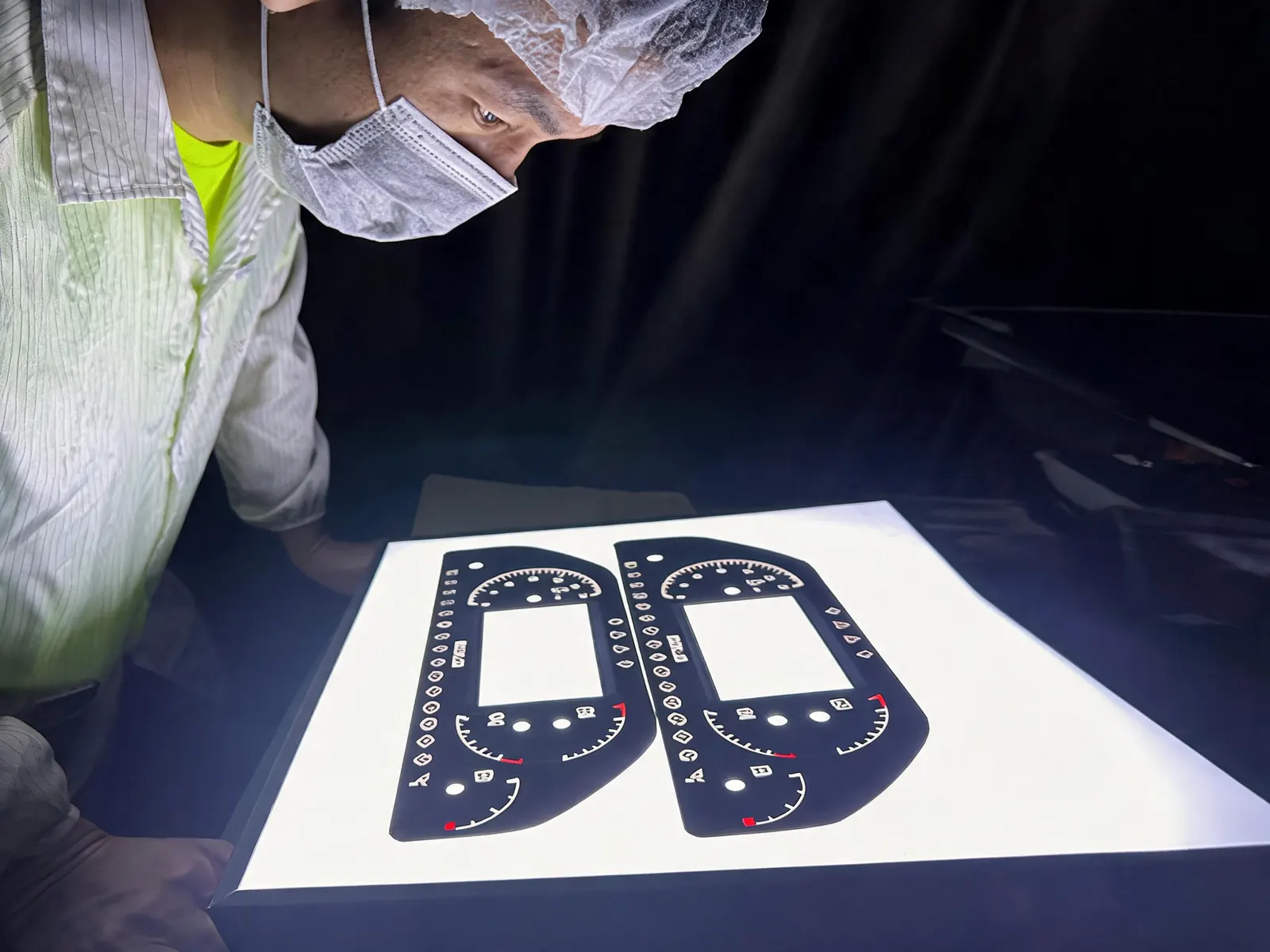
Custom PET & PC Graphic Overlays for Control Panels
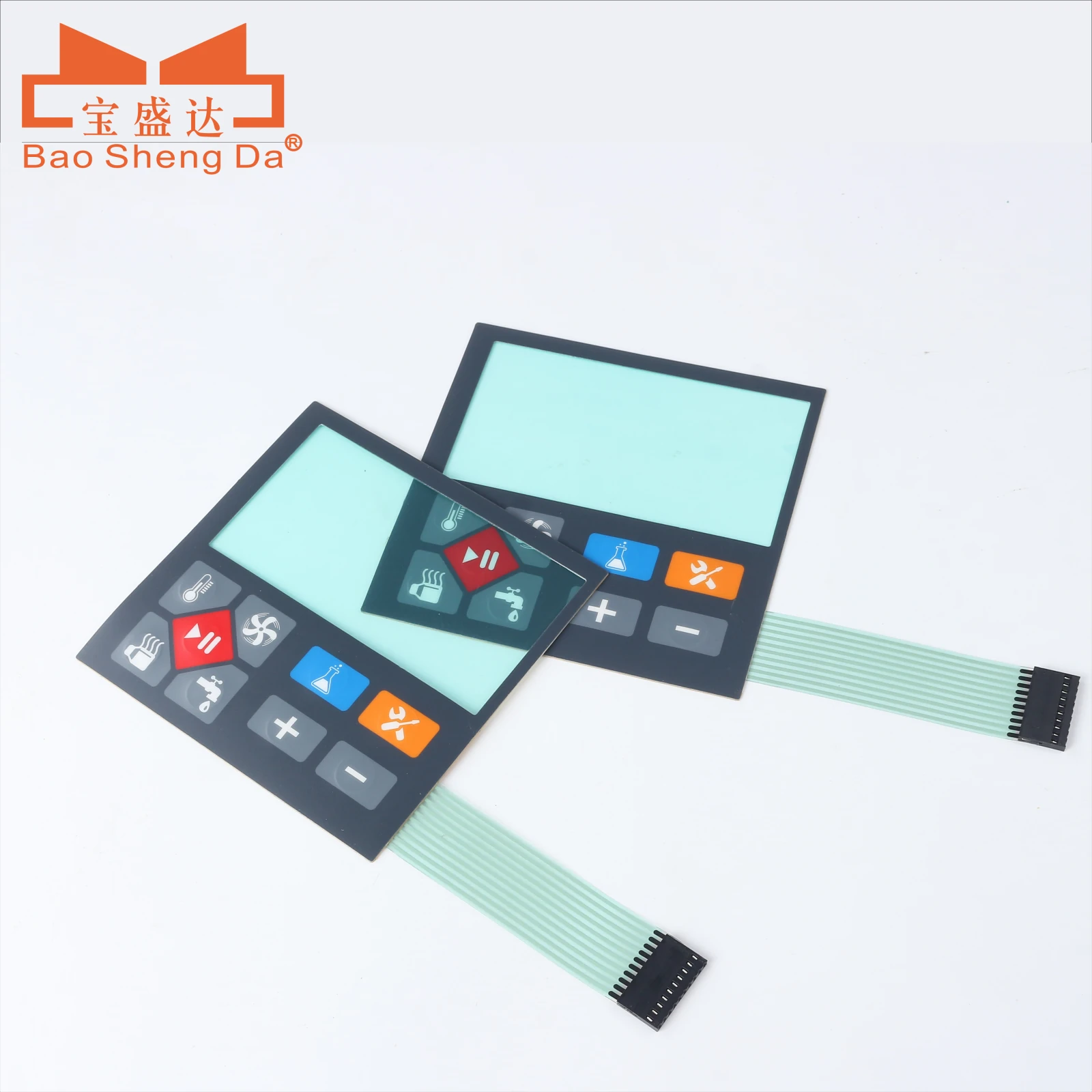
Printed faces, display windows and adhesive backing made to your artwork and housing. Baoshengda manufactures PET and PC graphic overlays for OEM equipment, supplied on their own or as part of a membrane-switch assembly.
Printed faces with integrated key circuitsThe flexible tails belong to these membrane-switch assemblies. A standalone graphic overlay is the printed face, without a switching circuit or output tail.
Face material
PET or PC; other films by project review
Windows & finish
Clear, translucent or dead-front; flat or embossed
Mounting
Adhesive matched to the housing and bonding area
Project route
New artwork, replacement part or supplier transfer
Do you need a graphic overlay or a complete input assembly?
A custom graphic overlay is the right route when an OEM needs a printed protective face, display windows, legends and adhesive geometry matched to a specific housing. It is a passive surface unless the project also includes a separate membrane circuit, sensor or touch layer.
Before sampling, define the material and finish, controlled artwork, transparent or translucent windows, embossed or flat areas, adhesive landing and actual cleaning or environmental exposure. Baoshengda can manufacture the printed overlay and review housing fit to customer-controlled files; the buyer owns symbol meaning, electronics, complete-equipment validation and the final acceptance standard.
For an initial review, send the artwork, outer profile and cutouts, window requirements, housing photos or drawings, surface and adhesive requirements, prototype quantity and expected demand. For a supplier transfer, also send the latest approved revision and known sample failures.
Choose an overlay when
The part is the printed and protective front surface.
Windows, finish, embossing and housing fit drive the design.
No switching circuit is required in the quoted part.
Send for first review
Controlled artwork, outline, cutouts and window map.
Material, finish, adhesive and housing information.
Cleaning exposure, sample quantity and expected demand.
Approve on the real housing
Window and legend registration.
Edge contact, curvature and adhesive landing.
Day, backlit or dead-front appearance where applicable.
Certification applies to the scope stated in each document. Your part's dimensions, materials and acceptance checks are confirmed for the project.
What Is a Graphic Overlay?
A graphic overlay is the top visual and protective layer of an HMI interface, control panel, membrane switch, display window or electronic device panel. It carries the product's icons, symbols, colors, logos, windows, instructions and touch areas.
The overlay must fit the housing and keep the display and legends readable. Surface protection, cleaning exposure and the bonding area should be checked on the mounted sample.
Graphic overlays are commonly used in industrial control panels, medical equipment interfaces, electronic instruments, automotive control panels, home appliances and smart devices.
Graphic Overlay and Film Panel Structure
Example: a windowed overlay bonded to a housingFace-to-housing review; not a fixed production stack or a test record.
PET or PC face filmSpecify the surface finish and clear or translucent window areas.
Reverse-printed graphicsLegends and colors are printed on the underside of the film. A clear window stays unprinted in this example.
Die-cut adhesiveReview the adhesive grade and cutouts against the actual bonding area.
Equipment housing and displayThe buyer's mating reference, not a layer of the quoted overlay.
The print is on the film, not a separate sheet. Windows, adhesive placement and any separate switch circuit are defined by the project drawing.
A custom graphic overlay or film panel can include the following features, depending on the project:
Protective Surface LayerMatte, glossy and textured finishes can be specified. Scratch, glare, fingerprint and cleaning requirements need a material and sample review.
PET / PC Film SubstratePET and PC are common starting points. PMMA or another film is reviewed against the drawing, forming needs, printing, housing and use conditions before selection.
Reverse Printing LayerGraphics are usually printed on the back side of the film to protect colors, symbols, logos and icons from direct wear during use.
Transparent or Translucent Window AreasDisplay windows can be designed for LCD, LED, indicator lights, touch areas, hidden icons or backlit graphics.
Dead-Front Printing LayerDead-front effects allow icons, display areas or symbols to remain hidden when the light is off and become visible when illuminated.
Adhesive Backing LayerIndustrial adhesive, 3M adhesive or customized bonding solutions can be selected based on the housing material, surface energy, temperature exposure and assembly requirements.
PET vs PC: What Buyers Usually Need to Decide First
Choose the film against the window design, finish, cleaning conditions and housing shape. These requirements affect printing, appearance and the mounted sample.
Material
Best fit and buyer checkpoints
PET overlay
Often preferred for durable printed overlays, embossed areas and stable reverse printing. Review surface finish, window clarity, cleaning exposure and whether the housing needs flexible bonding support.
PC overlay
Can fit certain forming, thickness or appearance requirements. Review scratch risk, surface hardness, window appearance and whether the stack needs extra support around cutouts or curved areas.
Dead-front or backlit windows
Review translucent print density, hidden-icon appearance when off and border alignment when lit. The material choice should match the optical target, not only the drawing note.
Adhesive and housing contact
Always review the real mounting surface, especially on painted, textured or powder-coated housings. Adhesive fit can change even when artwork and material stay the same.
If the panel includes windows, embossing or outdoor cleaning exposure, the mounted sample matters more than a flat desk review.
Technical Specifications
Item
Options / Description
Product Type
Custom graphic overlay, film panel, control panel overlay, display window overlay, HMI overlay
Material
PET, PC, PMMA or customized film materials based on project requirements
3M adhesive, industrial adhesive or customized adhesive solution based on housing material
Backlighting Compatibility
LED, LGF, EL, indicator light and dead-front effects available based on project requirements
Environmental Resistance
Chemical resistance, cleaning resistance, UV resistance, abrasion resistance and humidity resistance available based on requirements
Applications
Industrial control, medical equipment, instruments, automotive electronics, home appliances, smart devices
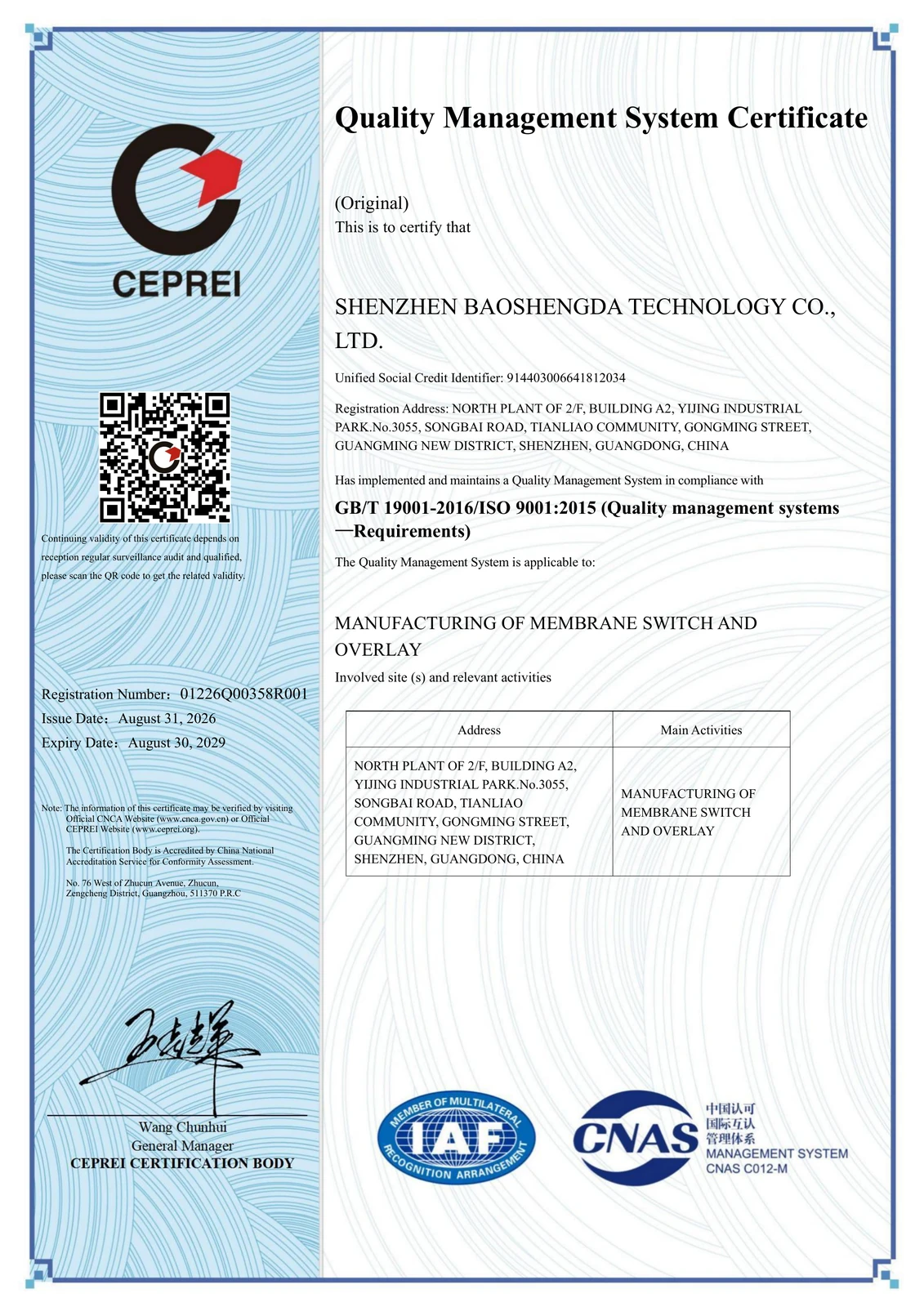
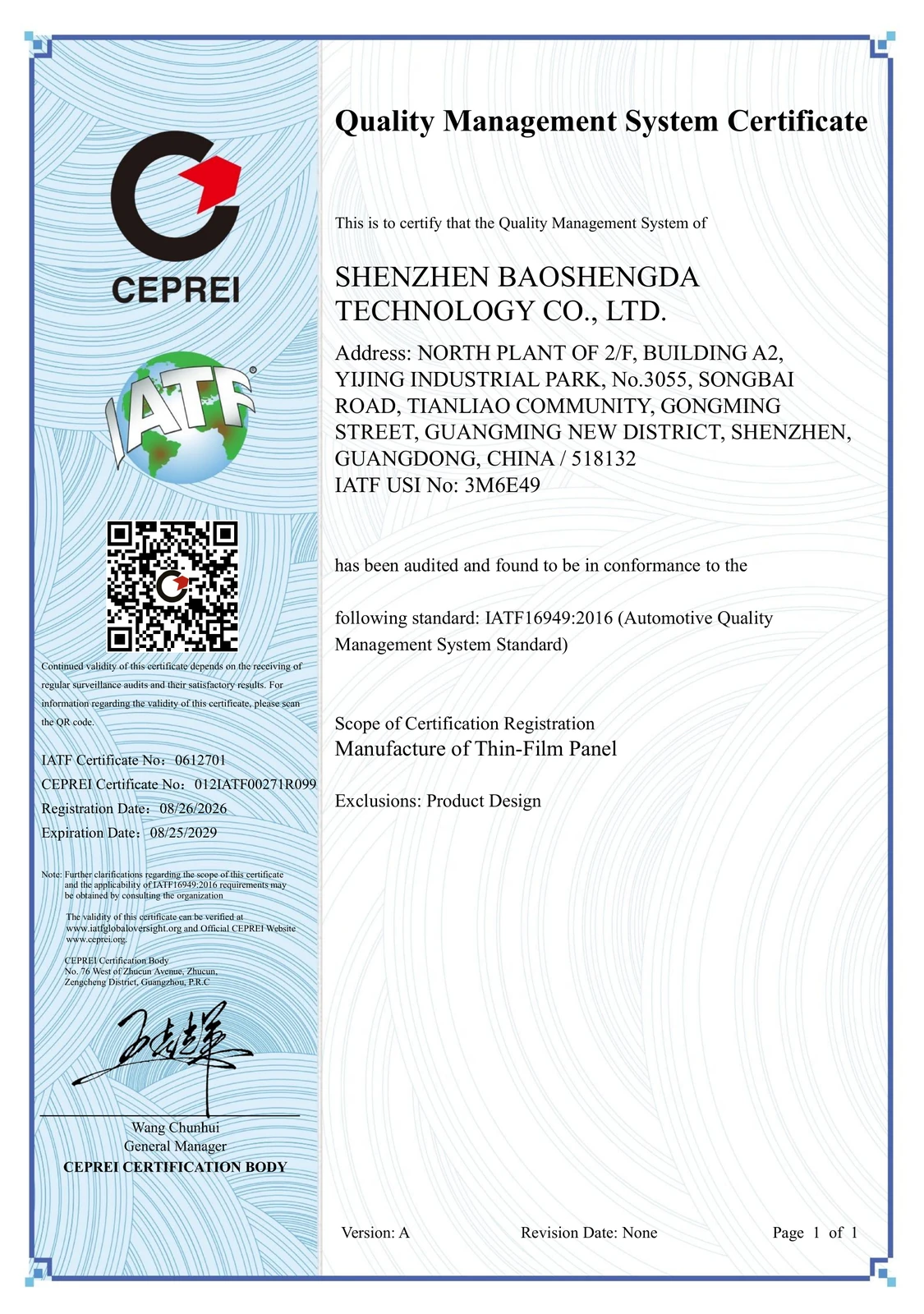
Company certificate scope
ISO 9001: manufacture of membrane switches and overlays. IATF 16949: manufacture of thin-film panels; product design excluded. Review applicability to the project against the certificate scope.
Final specifications depend on the drawing, artwork, material grade, finish, adhesive and application environment. Surface treatments and resistance targets need agreed sample checks; they are not universal specifications for every overlay.
Customization Options
Specify the artwork, windows, finish and adhesive for the part you need. These options are reviewed against your drawings, samples or application requirements.
Custom PET / PC graphic overlays and film panels
Reverse-printed graphics on the underside of the film
Transparent, translucent and dead-front display window options
Matte, glossy, textured, brushed and selective surface effects
Adhesive backing and housing fit support
Graphic and Appearance Customization
Custom colors, icons, logos and symbols
Transparent or semi-transparent display windows
Dead-front hidden window effects
Matte, glossy or textured surface finish
Brushed or selective texture effects
Color matching based on project requirements
Custom window shapes and indicator light areas
Material and Surface Customization
PET, PC, PMMA or other film material selection
Anti-scratch surface options
Anti-glare surface options
Anti-fingerprint options
Easy-clean surface options
Chemical cleaning resistance options
UV-resistant material and ink options
Assembly and Adhesive Customization
Custom outline shape
Die-cut holes and windows
Tailored adhesive backing
Housing fit and assembly tolerance review
Bonding surface compatibility review
Integration with membrane switches, touch switches, displays or electronic modules
For an overlay bonded to an ABS housing, specify whether the surface is bare, coated or textured, and show the available flat bonding area. Include the cleaners used on the equipment and the assembly conditions. Agree the mounted-sample checks and acceptance criteria before approving the adhesive construction.
Functional Design Support
Backlit icons and indicator windows
Dead-front graphics
Display window alignment
Touch area marking
Keypad and HMI layout design
Integration with custom membrane switch assemblies
What Buyers Should Approve Before Freezing Artwork
Approve the sample on the intended housing. Before releasing the artwork, check:
Window alignment against the real display or indicator position
Emboss, texture or finger-location effect under side light
Matte, gloss or anti-glare finish in the real viewing environment
Adhesive support near corners, windows and narrow bridges
Cleaning chemicals, wipe-down frequency and fingerprint expectations
Color reference and whether sample approval needs a physical standard
Housing flatness, coating texture and assembly pressure points
Any dead-front, backlit or membrane-switch integration requirement
If your current sample already shows window offset, weak embossing or edge lift, send the drawing, artwork and housing photos through the Request Quote form, so the next revision can target the real failure point.
Why Graphic Overlays Lift at Housing Edges
Review edge lift on the mounted sample, with the overlay, adhesive pattern, housing bonding area and any integrated tail in view.
Failure mode
What the buyer should review
Narrow or uneven housing land
Check the flat bonding width around every corner, window and cutout. Ribs, sink marks, texture and paint build can reduce real adhesive contact.
Adhesive too close to a window or edge
Show the adhesive die line separately from the printed artwork so narrow bridges and unsupported corners can be reviewed before tooling.
Cleaning or assembly contamination
Define the housing material, coating, cleaning method, assembly pressure and dwell time. A flat material coupon cannot prove the mounted bond.
Tail or cable load on an integrated assembly
For overlays combined with a membrane switch, show the tail exit, first bend, connector position and strain-relief path so the tail does not pull a corner upward.
For a failure review, send the overlay artwork, adhesive die line, housing drawing, mounted edge photos and cleaning process through the Request Quote page. See the housing-edge lift diagnosis guide for a step-by-step inspection path.
Applications
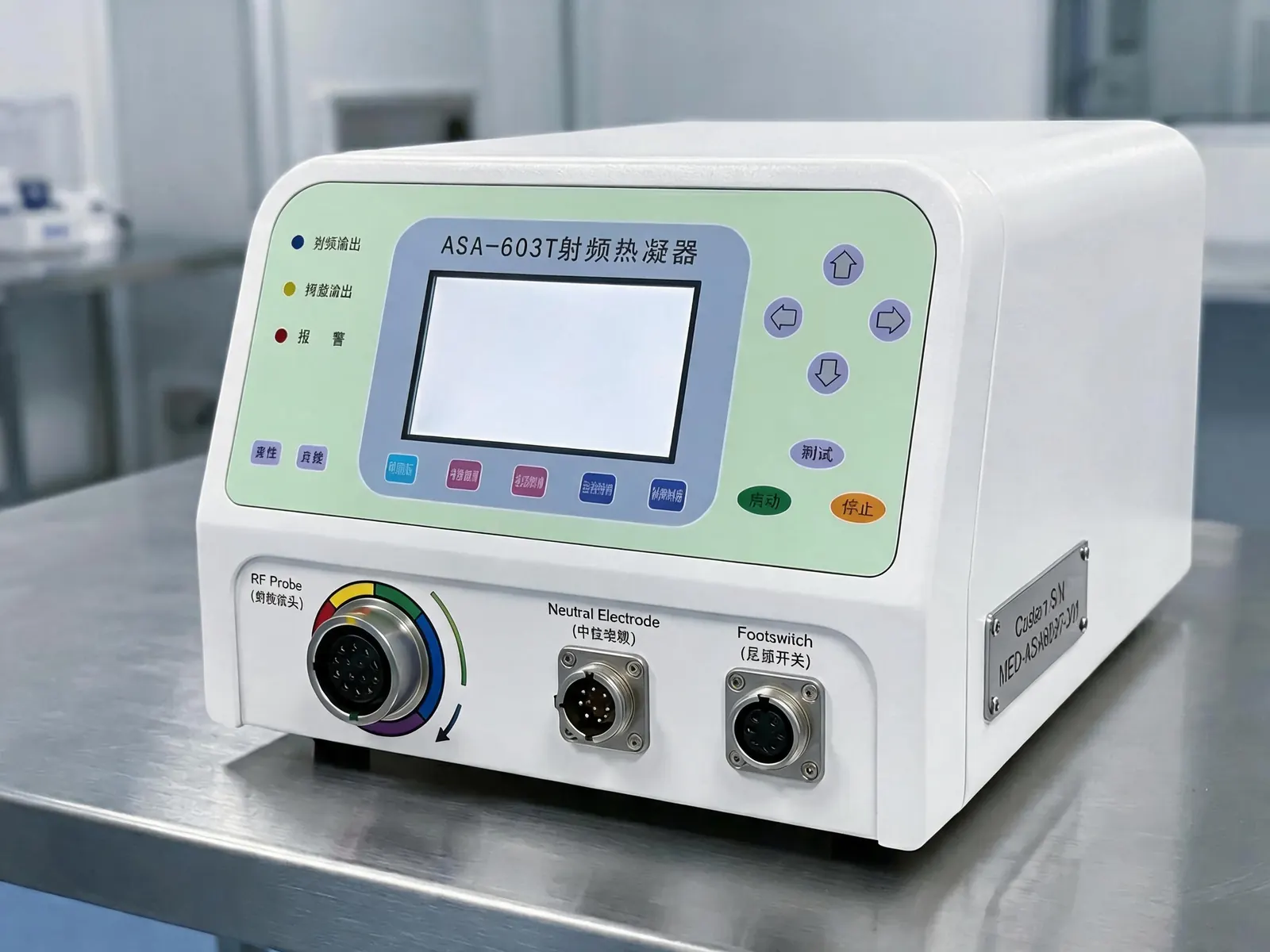
Example of a printed equipment front panel. The complete equipment is not the product offered on this page.
Industrial Control Panels
Graphic overlays are widely used for industrial control interfaces, automation equipment, machinery panels, testing instruments and operating terminals. Material, print and finish are specified for the equipment and its use conditions.
Medical Equipment Interfaces
For medical equipment, review the cleaning method, material compatibility, display windows and the assembled sealing arrangement. A film panel alone does not establish equipment compliance.
Electronic Instruments
Custom overlays can be used for measuring instruments, handheld devices, laboratory equipment and test panels requiring precise printing and durable surface protection.
Automotive Electronics
Graphic overlays and film panels can be applied to vehicle control interfaces, display windows, instrument panels, center console areas and interior electronic modules.
Home Appliances and Smart Devices
Film panels can be customized for appliance control panels, smart home interfaces, consumer electronics and compact electronic products.
Security and Access Control
Graphic overlays can be used for access control systems, alarm panels, control terminals and outdoor electronic interfaces.
Manufacturing and project review at Baoshengda
Manufacturing Roots Dating to 1989The production history began in 1989; Baoshengda became the independent company in 2007 and continues to manufacture HMI components, functional films and graphic overlays.
Integrated Custom DevelopmentWe support material selection, artwork review, printing feasibility, window design, adhesive structure, sample making and mass production.
Quality-system documentationReview the company certificates alongside your overlay drawing and application requirements. Their scope does not replace project-specific sample approval.
Flexible Manufacturing CapabilityWe can support custom graphic overlays, film panels, membrane switches, automotive dashboard overlays, backlit panels and integrated HMI modules.
Application-Focused EngineeringArtwork, use conditions, surface requirements, bonding, display visibility and assembly are reviewed together.
Global B2B SupportBaoshengda serves customers across industrial control, medical equipment, automotive electronics, communication devices, instruments and smart electronic products.
Quality and Testing
Quality control can be planned according to the customer's product requirements and application environment.
Appearance inspection
Dimensional inspection
Color consistency inspection
Printing alignment inspection
Window transparency inspection
Light transmission inspection where applicable
Adhesive and bonding review
Surface scratch and coating inspection
Key function testing when integrated with membrane switch assemblies
High and low temperature evaluation where applicable
Constant temperature and humidity testing where applicable
Salt spray testing where applicable
Agree any required material-compliance documents and their scope before sampling
For medical, industrial, automotive or outdoor applications, we recommend confirming surface durability, cleaning resistance, bonding and environmental requirements at the early design stage.
Changing Graphic Overlay Suppliers Without Losing Revision Control
Begin a supplier change with the latest approved drawing and artwork, alongside the existing part or sample photos. Buyers can send a controlled PDF, editable CDR, AI or DXF artwork, part photos or a physical sample for prototype review. The quotation should separate prototype quantity, tooling, color approval, adhesive die line and expected annual demand, so the replacement part can be checked before repeat production.
Transfer evidence
Why it matters
Latest approved revision and part number
Prevents an obsolete drawing, artwork layer or housing revision from becoming the quotation baseline.
Editable artwork plus PDF confirmation
Allows print layers, windows, symbols and cut lines to be reviewed while the PDF remains the visual approval reference.
Existing sample and housing photos
Shows finish, fit, adhesive contact, window alignment and any edge-lift evidence that the drawing may not capture.
Prototype and expected annual quantity
Separates the sample route from repeat-production pricing, tooling and process planning.
Acceptance criteria
Defines color reference, key dimensions, window registration, finish, adhesive and mounted-sample checks before approval.
For a controlled supplier-transfer review, send the latest approved files and sample evidence through the Request Quote page. Baoshengda can review the prototype package before any repeat-production commitment.
Choose the Right Graphic Overlay RFQ Route
For a new design, send the artwork and housing requirements. For a supplier transfer, include the approved revision, existing sample and any known failures.
New overlay design
Send the outline or dimensions, editable artwork plus a PDF reference, housing material and surface, window or backlight requirements, prototype quantity and expected annual quantity.
Send the governing revision, existing sample or mounted photos, editable artwork, adhesive die line, known defects and the acceptance checks that the replacement sample must pass.
No complete drawing yet? The RFQ form accepts a short requirement first; attachments remain optional and can be supplied later.
Sample quantities, tooling and quotation
State whether you need prototype overlays, a production batch or a second-source sample. Include the controlled artwork revision, finish, adhesive and housing information so the quotation covers the same part you intend to approve.
Ask us to confirm the minimum order quantity, any tooling charge, sample scope and schedule for your project. Agree the approval reference before production: the drawing and artwork revision, material or finish, fit checks and any required tests.
No complete drawing yet? Start with photos, dimensions and a short description of the application. Attachments are optional for the initial request.
For quotation, send the following information where available:
Latest approved revision, part number and 2D drawing or outline drawing
Editable artwork file plus a PDF visual reference, including logo, icon and color requirements
Pantone, RAL or color reference if required
Material requirement such as PET, PC or PMMA
Surface finish requirement such as matte, glossy, textured, AG or AF
Window requirement such as transparent, translucent or dead-front
Adhesive and bonding surface information
Backlight or display matching requirement if any
Application environment and cleaning requirements
Thickness requirement
Prototype quantity and expected annual quantity
Existing sample, reference part, mounted product photos or housing photos
If your design is still in the early stage, you can send us your concept drawing or existing product sample. Our team can help review material, printing, window, adhesive and assembly feasibility.
FAQ
What materials are commonly used for graphic overlays?
PET and PC are commonly used for graphic overlays. PMMA or other materials can also be selected based on transparency, surface finish, impact resistance, flexibility and application environment.
Should buyers choose PET or PC for a graphic overlay?
PET is often preferred when durability, print stability and flexible overlay construction matter most. PC may fit certain forming, thickness or appearance requirements. The right choice depends on the window design, finish, cleaning method and mounting structure.
Can you make dead-front graphic overlays?
Yes. We can support dead-front printing for hidden windows, backlit icons and display areas. The graphics can remain hidden when the light is off and become visible when illuminated.
What should buyers approve on the first overlay sample?
The first sample review should include window alignment, emboss or texture effect, surface finish under real light, adhesive contact on the target housing and any cleaning or glare risks.
Why does a graphic overlay lift at the housing edge?
Edge lift often starts with a narrow or uneven housing land, adhesive placed too close to a cutout, surface contamination, assembly stress or a flex tail pulling on an integrated switch stack. Review the mounted sample and housing geometry before changing only the printed film.
Can the overlay be integrated with a membrane switch?
Yes. Graphic overlays can be supplied as standalone panels or integrated with membrane switch assemblies, FPC circuits, PCB structures, backlighting and adhesive layers.
Do you support matte, glossy or textured surfaces?
Yes. We can support matte, glossy, textured, brushed-effect and selective surface finishes depending on the design and material requirements.
What information do you need for quotation?
We usually need the drawing, artwork file, material requirement, surface finish, window requirement, adhesive requirement, application environment and estimated quantity. Sample photos are also helpful for early review.
Can Baoshengda quote an existing graphic overlay when a buyer changes suppliers?
Yes. Send the latest approved PDF, editable CDR, AI or DXF artwork, an existing part or sample photos, prototype quantity and expected annual quantity. We review revision control, print layers, windows, adhesive, housing fit and approval criteria before tooling or repeat production.
Do you support custom adhesive backing?
Yes. We can support 3M adhesive, industrial adhesive or customized adhesive structures based on the housing material, bonding surface and working environment.
Combine the overlay with other front-panel components
Graphic overlays and film panels form the printed face of an HMI front panel. They can be combined with membrane switches, backlighting, windows and adhesive structures for a complete front panel assembly.